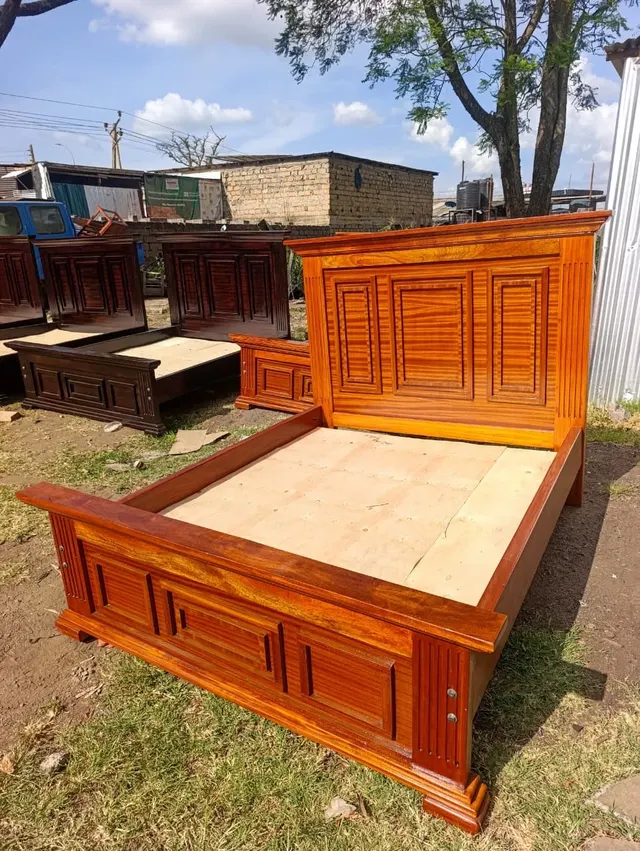
Locally Made vs Imported Furniture in Kenya: Why Kenyan-Made Is the Smarter, More Luxurious Choice
Locally made vs imported furniture in Kenya compared on materials, durability, fit, comfort, repairs, lifetime cost and true luxury, and why bespoke Kenyan-made furniture wins on almost every count.
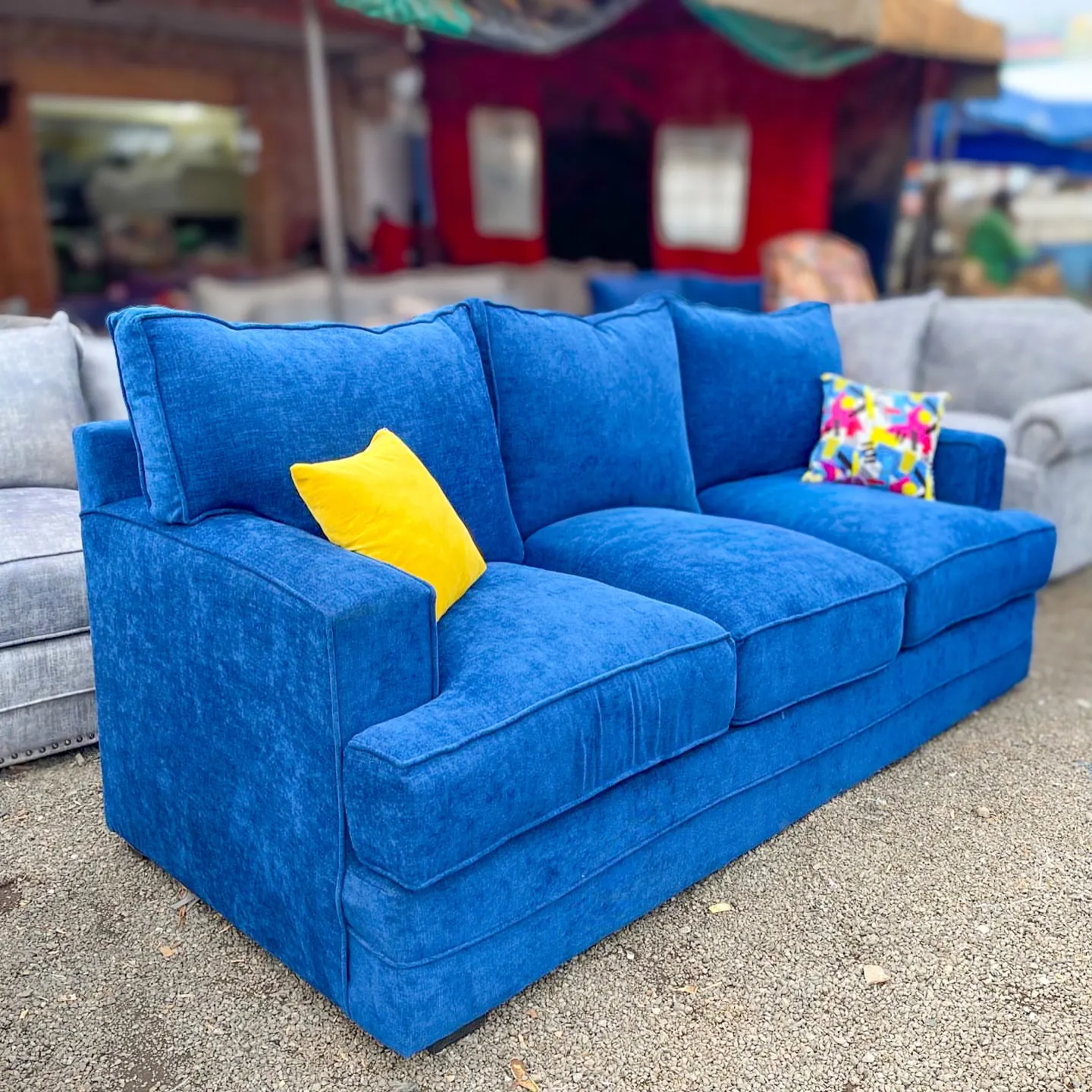
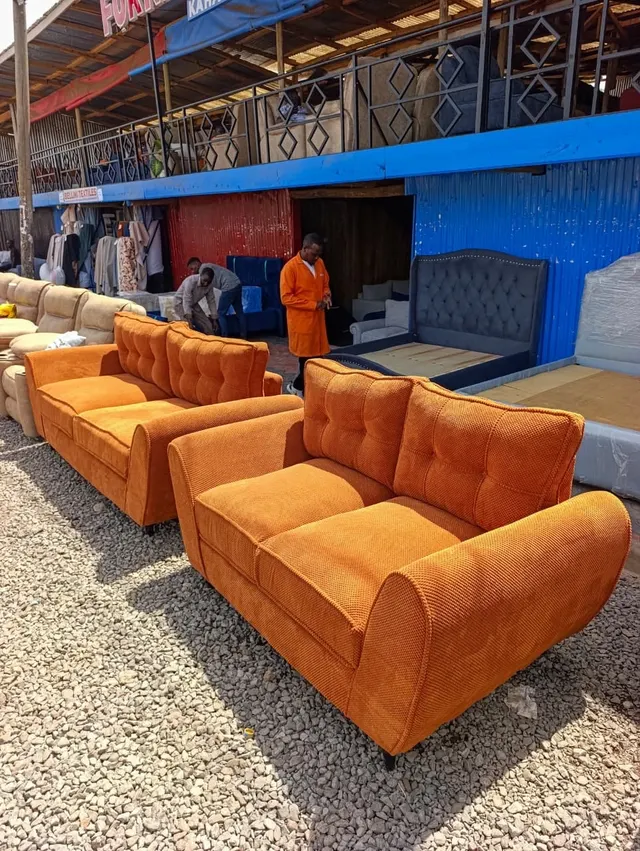
Walk into a large Nairobi showroom and many pieces will have come off a ship from China, Malaysia, Turkey or further away. Walk into a Kenyan workshop and you’ll see a frame being built from solid wood, foam being cut to size and fabric being stretched by hand for one specific customer.
Both can look beautiful in a photo. But when you compare what’s inside the furniture, how well it fits your home, how long it lasts, and what it costs over its whole life, well-made Kenyan furniture comes out ahead on almost every count. Here’s why.
Written by Bobby Furniture Kenya, a furniture maker in Kahawa Sukari, off Thika Road. Our furniture is made by our own team in Kenya.
At a glance
| What matters | Well-made locally | Mass-produced imported |
|---|---|---|
| Frame | Solid wood you choose: mvule, mahogany, cypress and more | Fixed by the factory; often engineered board or unnamed wood |
| Cushions | You choose: high-density foam, memory foam, springs or fibre | Fixed; you rarely know the foam grade |
| Size | Made to your exact room, door and stairs | Fixed sizes made for foreign homes |
| Design | Any design, from your photo, Pinterest pin or sketch | Only what was shipped |
| Fabric and colour | Your choice | Limited to stock |
| Transparency | You can ask the maker what’s inside and see it being made | Specifications hard to verify |
| Repairs and re-upholstery | Easy: the maker is here | Difficult; parts and fabric may not exist in Kenya |
| Price | No shipping, import duties or middlemen | Includes shipping, import taxes and importer margins |
| Lifetime cost | Re-cover and repair for many years | Often replaced when something breaks |
| Suited to Kenya | Built for Kenyan homes, climate and daily family use | Built for another market |
| Local economy | Supports Kenyan craftsmen and jobs | Money leaves the country |
1. You control what’s inside, and that’s what decides how long it lasts
The parts you can’t see in a showroom are what make a sofa last 3 years or 15. When you buy locally, you choose them:
- Frame wood. Mvule is a dense East African hardwood, naturally resistant to termites and rot. Mahogany is stable, strong and beautiful where the wood shows. Cypress is a good-value option when properly dried and treated. Compare them in our guide Mvule vs mahogany vs cypress.
- Cushions. High-density foam keeps its shape for years; memory foam adds softness; springs add support; fibre makes backs and pillows soft. See choosing sofa cushions.
- Fabric. Corduroy for busy family homes, velvet for statement pieces, leather-look for easy cleaning. See corduroy vs velvet.
With most mass-produced imports, these decisions were made in a factory to hit a shipping price, and you often can’t find out what they were.
2. Built for your home, not a catalogue
Imported furniture comes in fixed sizes designed for homes in other countries. Kenyan homes are different: compact apartments in Kilimani and Ruiru, narrow stairwells, small lifts, large family sitting rooms upcountry.
A local maker builds to your measurements:
- An L-seat that fits your corner exactly.
- A U-shaped sofa made in sections so it fits through a narrow door or lift.
- Beds in Kenyan sizes: 3×6, 4×6, 5×6 and 6×6, matching locally available mattresses. See bed sizes in Kenya.
- Seat depth and height suited to the people who’ll use it every day.
3. True luxury is bespoke
The most exclusive furniture in the world isn’t picked off a shelf. It’s made for one client. That’s exactly what locally made furniture gives you:
- Any design you love, from a Pinterest pin, an Instagram post, a hotel lobby photo or a sketch.
- Your exact fabric, colour, size, legs and finish.
- A piece nobody else has, rather than the same imported model in a thousand homes.
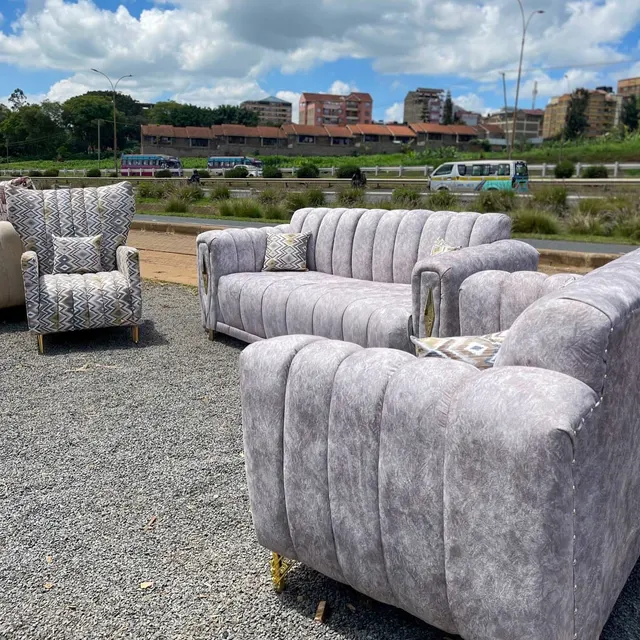
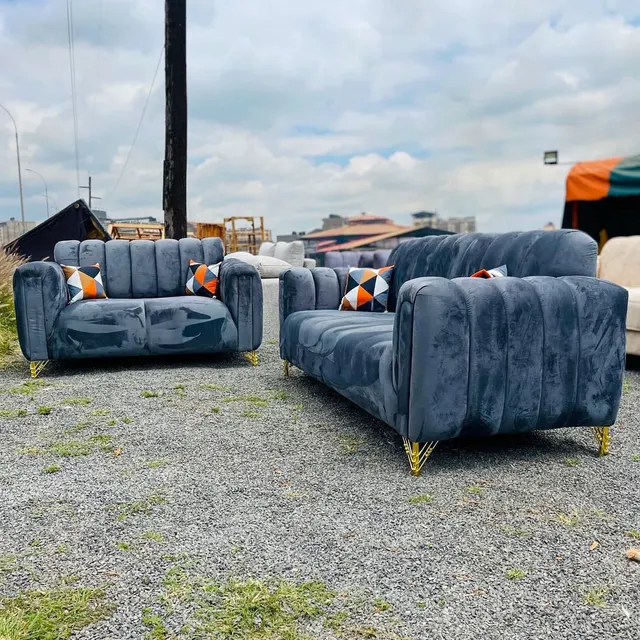
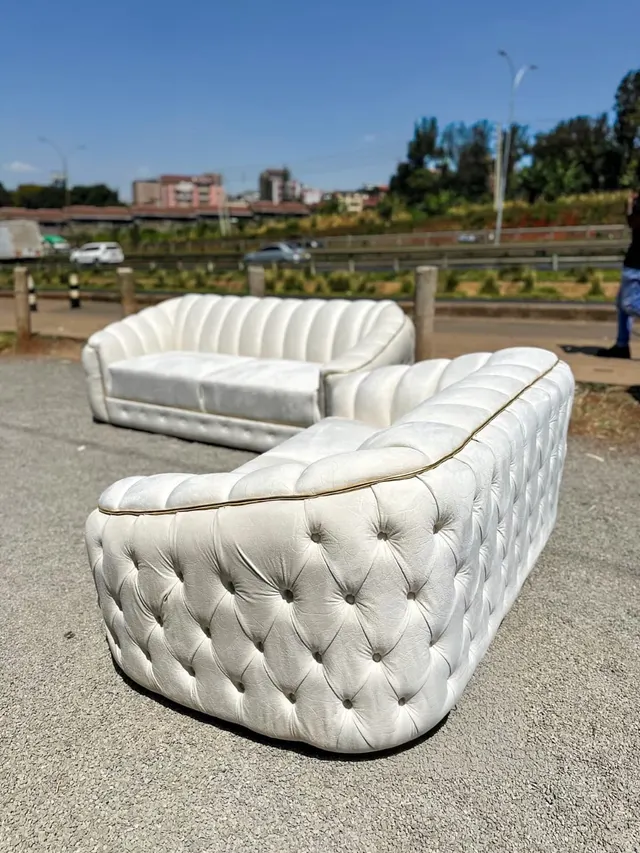
- Hand-finished details such as deep button-tufting, channel-tufting, fluting, piping and nailhead trim, done by craftsmen rather than a production line.
See custom furniture made from your photo.
4. Better value: you pay for the furniture, not the shipping
A large share of an imported sofa’s price can be shipping, import duties and taxes, clearing, warehousing and importer margins. None of that makes the sofa more comfortable or longer-lasting.
With locally made furniture, more of your money goes into solid wood, good foam and skilled workmanship. That’s how a Kenyan maker can offer a hardwood-frame sofa at a fair price. See affordable furniture that lasts and our live price lists.
5. The lowest lifetime cost
The real cost of a sofa isn’t the day you buy it; it’s how long it serves you.
- Re-upholstery: a solid local frame can be re-covered in a new fabric years later, giving you a “new” sofa for a fraction of the price.
- Repairs: a loose joint, a worn cushion or a broken leg can be fixed by the maker, rather than throwing the whole piece away.
- Cushion refills: foam and fibre can be replaced when they finally wear.
- Upgrades: add a section to your L-seat or change the legs when you move house.
Imported pieces often become impossible to repair once a specific part or fabric is no longer available.
6. You can see it, ask about it and trust it
When furniture is made in Kenya, you can:
- Visit the showroom and sit on similar pieces.
- Ask exactly what’s inside: the wood, the foam, the springs.
- Get photos or a video of your piece before delivery.
- Talk to the people who made it if anything needs attention, backed by a local warranty.
7. Made for Kenyan life
Furniture in Kenya has to cope with dust, strong sun, busy family homes, visitors and children. A local maker knows this and advises on fabrics and finishes that hold up, such as mid-tone corduroy and textured weaves that hide dust, and hardwood frames that resist termites. Read our sofa care guide for Nairobi dust and sun.
8. Every purchase supports Kenyan craftsmanship
Buying Kenyan-made furniture keeps skilled carpenters, upholsterers and finishers in work, and keeps money in the Kenyan economy, from the timber yard to the workshop to the delivery team.
When might imported make sense?
To be fair: if you need a specific international brand, factory-made metal or flat-pack furniture, or a piece that’s in stock today and you can’t wait, an import can suit you. For sofas, beds, dining sets and anything you want to fit your home perfectly and last for years, well-made local furniture is the stronger choice.
How to choose a good local maker
Not all local furniture is equal. Choose a maker who:
- Tells you the wood and foam, and lets you choose. See how to tell a good-quality sofa.
- Publishes prices and confirms the full total, including delivery, in writing.
- Offers a warranty.
- Has real Google reviews and a physical address.
- Sends photos or video of your actual piece before delivery.
Why Bobby Furniture Kenya
- Made locally by our own team in Kenya.
- You choose the frame wood: mvule, mahogany, cypress and more.
- You choose the cushions: high-density foam, memory foam, springs or fibre.
- Custom from your photo, in your size, fabric and colour.
- 6-month warranty, plus a 48-hour delivery check.
- Every price and delivery fee published on our website.
- Delivery across Nairobi and Kenya, with assembly on request.
Visit our showroom in Kahawa Sukari, off Thika Road, open every day 7am–7pm, or WhatsApp 0708 156 310 to start your piece. Browse our furniture or send us your design.
FAQ
Is locally made furniture in Kenya good quality?
It can be excellent. Choose a maker who uses hardwoods such as mvule or mahogany, high-density foam and careful workmanship, publishes prices and offers a warranty. Bobby Furniture Kenya lets you choose the wood and foam, and gives a 6-month warranty.
Is locally made furniture cheaper than imported furniture?
For similar size and materials, locally made furniture is often better value because you don’t pay for shipping, import taxes and importer margins. You can also choose materials to fit your budget.
Can locally made furniture look as luxurious as imported furniture?
Yes, and often more so, because it can be made to any design, in your choice of fabric, colour and finish, including tufting, fluting and gold or wooden legs. Bespoke furniture is the definition of luxury.
Can I get a sofa made from a picture in Kenya?
Yes. Bobby Furniture Kenya makes sofas, beds and dining sets from your photo, Pinterest or Instagram design. See custom furniture in Nairobi.
Which wood is best for locally made furniture?
Mvule for the strongest, termite-resistant frames, mahogany for beautiful visible wood, and treated cypress for good-value pieces.